Greek helicopter collision kills 2, British pilot survives
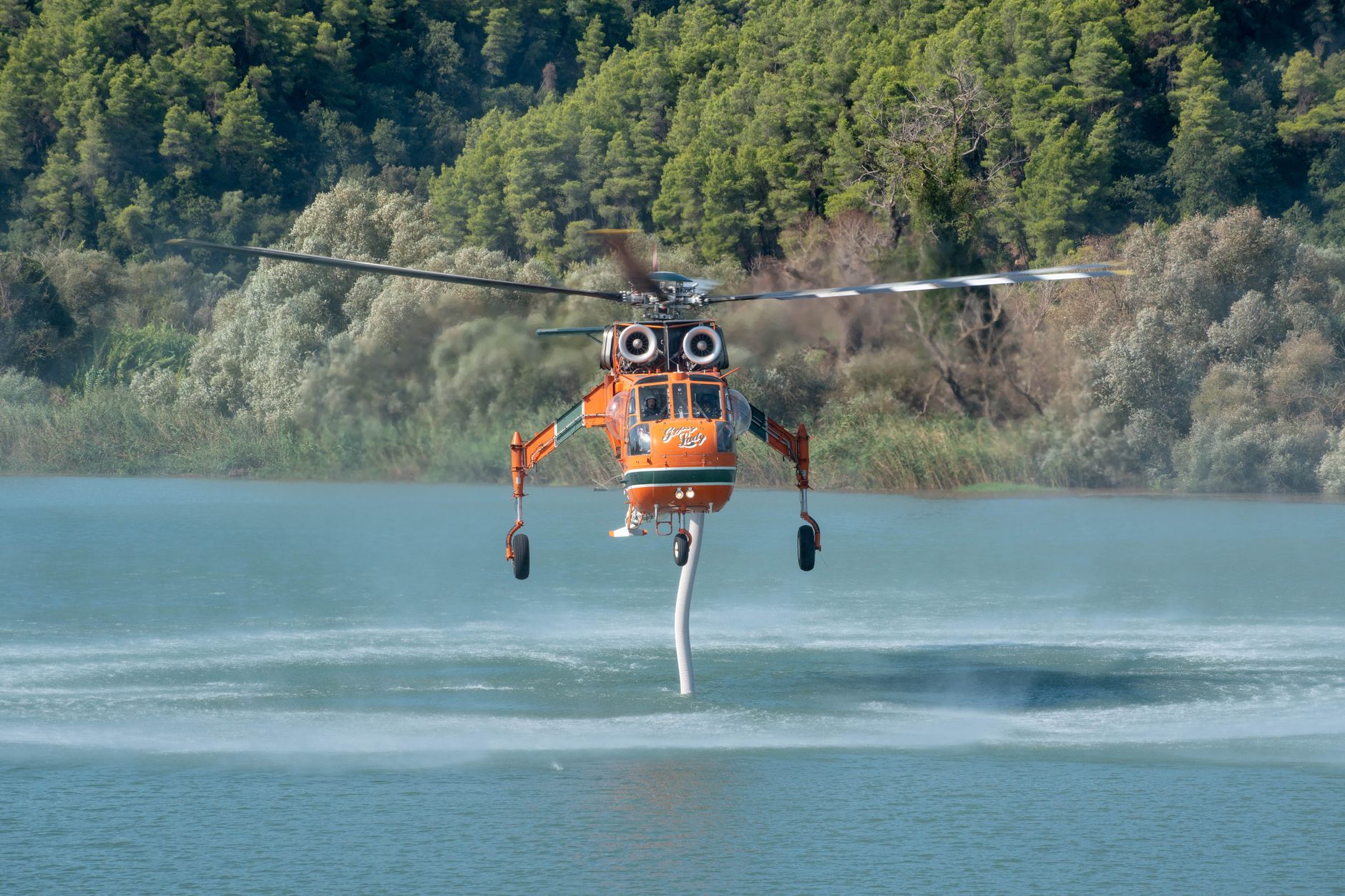
Two crew members died when firefighting helicopters collided over Greece. A British pilot survived with minor injuries.
Two crew members were killed on Sunday when two firefighting helicopters collided mid-air in Greece while battling a large wildfire near the Attica-Boeotia border, roughly 65 kilometers (42 miles) west of Athens. The deceased were identified as a Danish pilot and a Greek fire service liaison officer, while a British pilot and another Greek coordinator on the second helicopter survived with minor injuries.
Fatal Collision Caught on Video
Footage of the incident captured the moment one Bell helicopter struck the propellers of another, causing it to burst into flames and crash into a ravine. The second helicopter managed an emergency landing in an area of low vegetation. According to the Greek Fire Service, the crew of one aircraft were rescued alive, but the crew of the other were recovered unconscious and later pronounced dead.
The collision occurred during efforts to control a wildfire on the border between Attica and Boeotia, part of a series of blazes that have forced mass evacuations across the country.

Survivors and Official Response
Greek news outlet Ekathimerini reported that the two survivors immediately reported the collision, guiding rescuers to the crash site. A source from the civil protection ministry told the BBC that the British pilot was a private pilot hired for the wildfire season, adding that there was no exchange between the UK and Greece and no request for assistance from Athens. Both survivors were admitted to hospital and remained under observation for 24 hours as a precaution.
In accordance with protocol, all Bell helicopters in Greece have been grounded, a source from the civil protection ministry said. The ministry emphasized that the second helicopter involved in the collision made a safe emergency landing, and both occupants remained conscious.
Greek Prime Minister Kyriakos Mitsotakis expressed his "deepest sorrow" over the accident. In a post on X, he said the loss of the Greek coordinator and Danish pilot "fills us all with grief" and extended condolences to their families.
Wildfires Challenge the Region
The deadly collision underscores the intensity of this week's wildfires in Greece. Local media describe "a titanic battle" along a swathe of territory that includes Porto Germeno, Psatha, Fokida, Megara and Kefalonia, where more than 500 firefighters have been struggling to bring the situation under control over the past 72 hours.
Elsewhere in Europe, France and Spain have also battled devastating blazes during prolonged heatwaves. Two of the largest fires, near Madrid and Bordeaux, have now been contained, though they are still burning. Some 300,000 people who were evacuated have started to return to their homes.
Climate Change as a Driver
Most wildfires are sparked by human activity, whether intentional or accidental, but climate change is making the conditions for them more common. Last winter's mild and wet weather encouraged vegetation growth, which has since dried out in successive hot spells, generating abundant fuel for fires. Italy, meanwhile, has placed nearly all its major cities on the highest heat alert as the region swelters.
As the fires continue, the grounding of Bell helicopters may affect firefighting operations, though Erickson Air-Crane and Chinook helicopters, as well as Canadair water-bombing aircraft, remain in service. The immediate focus is on containing the remaining blazes and supporting affected communities, while investigations into the collision will likely scrutinize the circumstances that led to the deadly mid-air tragedy.