Araghchi reveals escape from rubble after Khamenei killing

Iran's foreign minister describes being pulled from the debris after the US-Israeli strike that killed the supreme leader, and confirms a security breach.
Iran's Foreign Minister Abbas Araghchi has provided a harrowing account of the moment a US-Israeli airstrike killed Supreme Leader Ali Khamenei on the first day of the war, revealing that he was pulled from the rubble of a leadership compound and has been on the move ever since. In an interview published Sunday, Araghchi confirmed that the attack was based on precise intelligence, exposing a dangerous security gap that may still exist within Iran's leadership structure.
The Attack and Escape
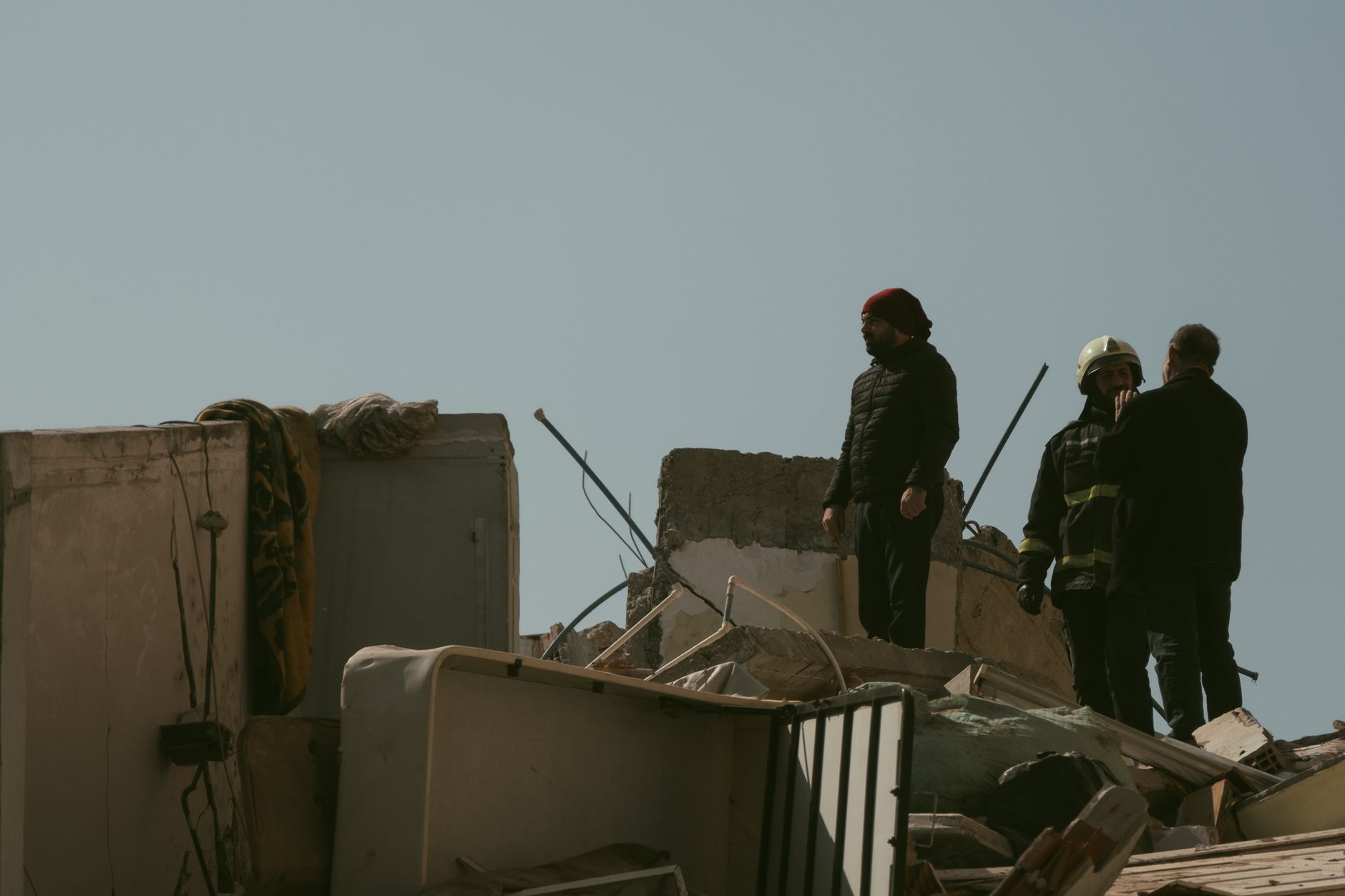
Araghchi told Iranian journalist Javad Mogouyi that the joint strikes began shortly after 9am, when senior officials had gathered for meetings at the Ministry of Intelligence, the Strategic Council on Foreign Policy, and the Defense Council. He was reporting back to Khamenei's deputy chief of staff, Ali Asghar Hijazi, when three blasts rocked the building in quick succession. The third explosion struck nearly directly, collapsing the section where Hijazi's office was located. His secretary was killed instantly, but Araghchi and Hijazi were on the opposite side and survived. “The ceiling, walls, and everything collapsed on us. I grabbed Mr. Hijazi's hand, and we made our way through the beams and boards,” Araghchi recalled. Water poured from shattered pipes as they crawled out amid cries for help. Once outside, he saw multiple parts of the compound had been hit. Because his official car had been destroyed, a passerby rushed him to the Foreign Ministry.
Acknowledged Security Gap
In a stark admission, Araghchi said Israel and the US had accurate intelligence on the location of Khamenei and other officials, enabling them to precisely target Iran's senior leadership. “What matters, in my view, is the fact that Israel had intelligence about these meetings,” he stated, adding, “This may point to a security gap that probably still exists. This needs to be fixed.” The revelation underscores a vulnerability that Iran's new leadership must urgently address. For three days after the attack, Araghchi said he and other survivors were cut off from communication, trying to determine who was alive and who had been killed. Despite the decapitation strike, he insisted that the enemy failed to paralyze the regime.
Diplomacy Before War
Araghchi also revealed that Iran had pursued negotiations with the US earlier this year, despite his personal doubts about their success. He described the talks as necessary to ensure that Iran could not be blamed for a failure of diplomacy. In the final round of talks in Geneva, Iran offered a deal on its nuclear program, but the atmosphere in Washington shifted dramatically, according to Oman's Foreign Minister Badr Albusaidi, who relayed that the US had become more bellicose. The next morning, the airstrikes began. Araghchi's account paints a picture of a regime that attempted to avoid war but faced an adversary determined to strike.
Code 110: The Contingency Plan
In a revealing detail, Araghchi confirmed that Iran had prepared for the possibility of a strike on the supreme leader. Pre-drawn plans included closing the strategic Strait of Hormuz under a contingency known as “Code 110,” referencing the constitutional clause that outlines succession. This indicates that Iran had long anticipated such an attack and had a response mechanism ready. However, the immediate aftermath was chaotic: leaders were disconnected, and the regime's continuity relied on pre-established protocols.
Looking ahead, Araghchi said he has not yet met Iran's new leader, Khamenei's son Mojtaba, but noted that his appointment sends a clear message of continuity in policy. With the resumption of hostilities ten days ago, the war has entered a new phase. The security breach Araghchi highlighted suggests that Iran's leadership must now operate with heightened vigilance, while the world watches to see if Code 110 will be activated. The strategic implications of closing Hormuz could reshape global energy markets and escalate the conflict further. As Araghchi himself put it, “We do not fight unless the cost of not fighting is higher than the cost of fighting.” The coming days will reveal whether Iran calculates that cost to have been met.