France races to contain wildfires as new heatwave looms

President Macron says one fire is contained, but a larger blaze near Bordeaux rages on as western Europe braces for another heatwave.
France is scrambling to gain control over multiple wildfires in the southwest, even as the region faces a new heatwave that threatens to worsen fire conditions. President Emmanuel Macron announced Monday that one major forest fire in the area had been “contained,” but a second, significantly larger blaze near Bordeaux continues to burn out of control. The developments come as much of western Europe prepares for a spike in temperatures that could further dry out vegetation and complicate firefighting efforts.
Macron’s update amid twin crises
Speaking to reporters, Macron described the containment of the first fire as a relief, but cautioned that the situation remains fluid. The contained fire, which started days earlier in a wooded area, is now under close watch, with reinforcements stationed to prevent flare-ups. Meanwhile, the second fire—located near Bordeaux, a major city and wine-producing hub—has already consumed significant forested land and is advancing rapidly. Thousands of firefighters are deployed, with aerial water tankers and ground crews working around the clock. Macron praised their bravery and called for national solidarity. Authorities have evacuated several villages as a precaution, though no casualties have been reported.
Bordeaux blaze threatens communities
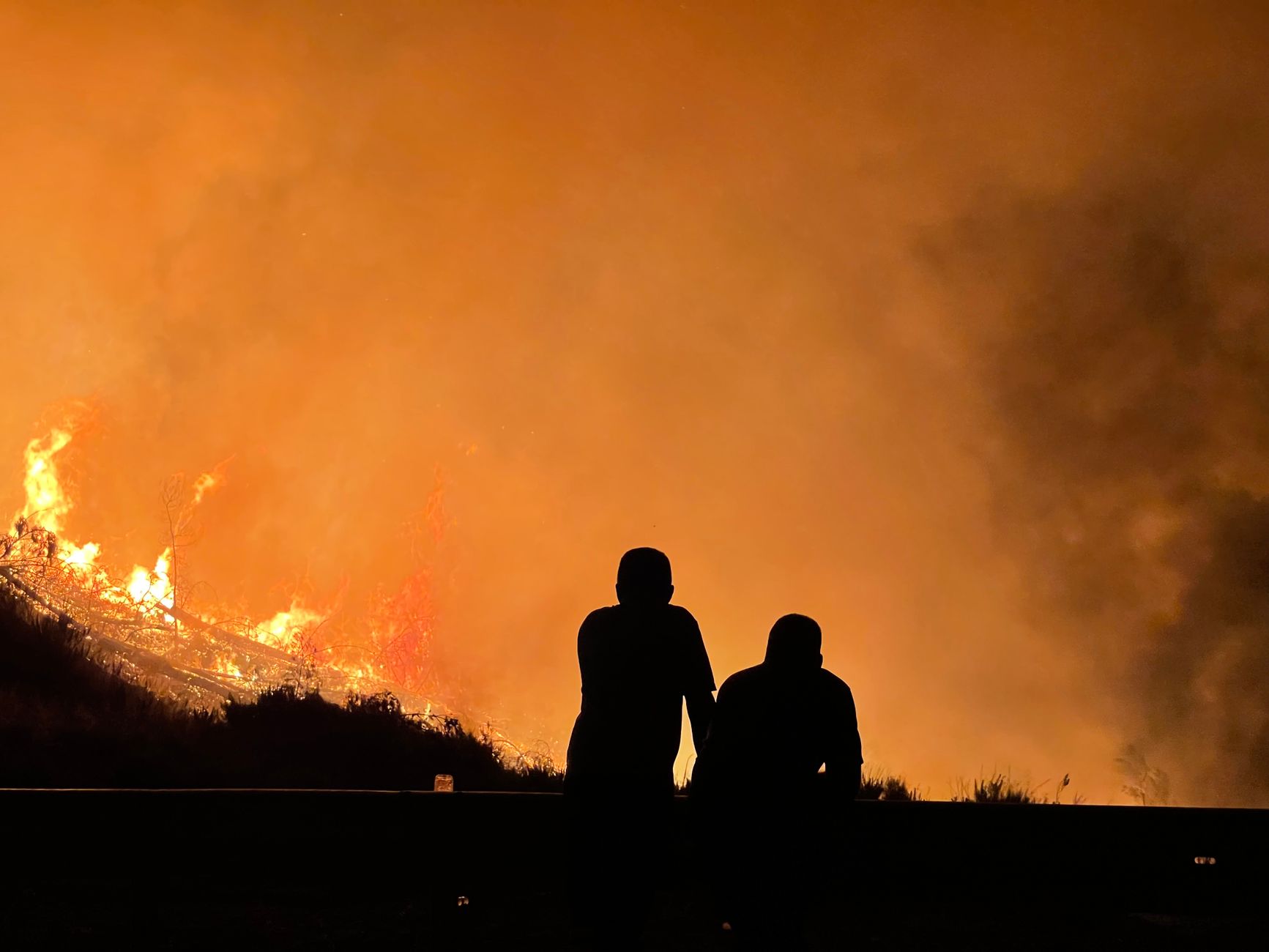
The larger blaze, which ignited over the weekend, has been fueled by dry brush and strong winds. Fire departments estimate that more than 4,000 hectares have been scorched, a figure that could rise if high temperatures and low humidity persist. Local officials warn that the flames are creeping toward populated areas, with emergency shelters set up for displaced residents. The fire’s proximity to Bordeaux raises particular concern due to the city’s economic importance and high population density. Firefighting teams from across the country have been mobilized, along with support from neighboring European nations under a mutual aid agreement. However, the coming heatwave could stretch resources thin.
Heatwave returns to western Europe
Meteorological agencies across France, Spain, Portugal, and the UK are forecasting exceptionally high temperatures starting midweek. In France, thermometers are expected to reach up to 40°C in some southern regions, with little relief at night. The heatwave, the second this summer, comes as the country is still recovering from an earlier period of extreme heat that contributed to wildfires in other regions. Climate scientists link such extreme weather events to global warming, which increases the frequency and intensity of heatwaves and droughts. For firefighters, the soaring temperatures mean higher evaporation rates, drier vegetation, and greater risk of new ignitions. The national weather service has issued red alerts in several départements, urging people to stay hydrated and avoid outdoor activity during peak heat.
Government response and preparations
Macron has convened an emergency task force to coordinate firefighting and heatwave response. The government is distributing water supplies and setting up cooling centers in affected towns. Public health officials have activated emergency plans for vulnerable populations, especially the elderly and homeless. Firefighting budgets have been temporarily boosted, and the government has appealed for additional European Union support via the Civil Protection Mechanism. Opposition leaders have criticized the administration for not doing enough to prevent fires through better forest management and stricter land-use policies. Meanwhile, energy grid operators are bracing for record electricity demand as air conditioning usage surges, raising concerns about potential blackouts.
Looking ahead
As the heatwave intensifies, containment efforts for the Bordeaux fire face mounting challenges. Firefighters are racing to create firebreaks and cool down hotspots before winds pick up again. If the blaze continues unchecked, experts warn it could become one of the most destructive in the region’s history. Beyond the immediate crisis, the events underscore the growing need for national adaptation strategies to cope with a hotter, drier climate. France, like many European countries, must invest in fire prevention, better land management, and resilient infrastructure. For now, the focus remains on saving lives and property, but the coming days will test the country’s ability to handle compounding disasters.