Chinese warship holds live-fire drills in Japan's EEZ for first time

A Chinese missile destroyer fired live rounds inside Japan's exclusive economic zone for the first time, prompting a diplomatic protest. The drill coincided with a clash between Chinese and Philippine sailors in the South China Sea.
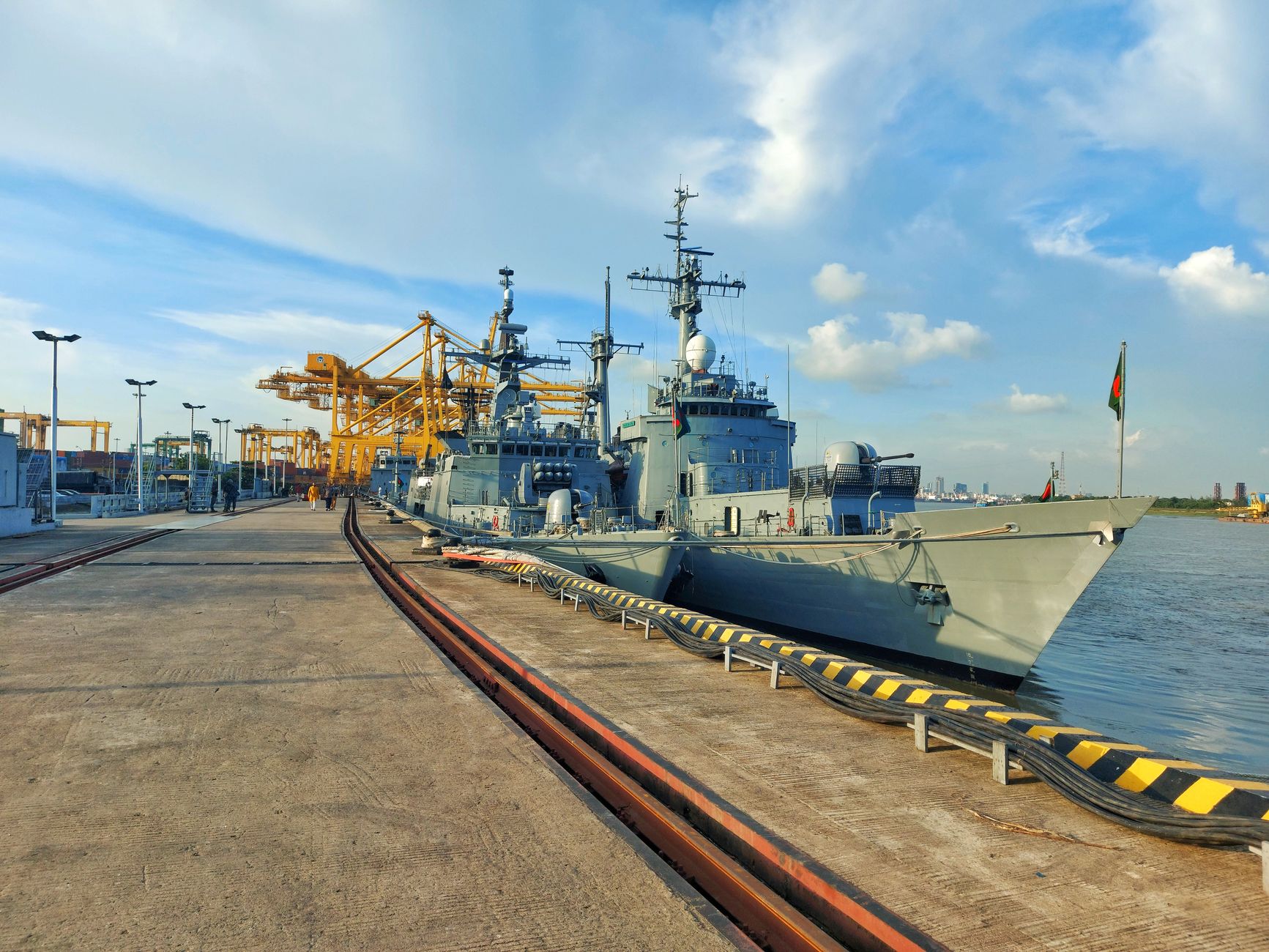
A Chinese missile destroyer conducted live-fire drills inside Japan's exclusive economic zone (EEZ) on Sunday, marking the first time a foreign navy vessel has been acknowledged by Tokyo to have fired live rounds in these waters. The exercise took place approximately 180 kilometers from Okinotori, Japan's southernmost island, and came just a day before Chinese and Philippine sailors clashed near the Second Thomas Shoal in the South China Sea.
Drill Details
Three Chinese warships and a Russian frigate were first spotted sailing between Okinawa's main island and Miyako island into the Pacific on Thursday. By early Sunday morning, the group was detected around 330 kilometers southwest of Okinotori. The Chinese missile destroyer then issued a warning to nearby shipping that it would be conducting a live-fire drill involving machine guns. Japan's Defense Ministry confirmed the event, mobilizing air and sea surveillance assets to monitor the situation.
Japan views the drill as part of deepening military cooperation between China and Russia. Chief Cabinet Secretary Minoru Kihara stated at a Tuesday briefing that Tokyo sees the exercise as "part of a move by the two militaries toward strengthening their cooperation." He added that Japan had communicated its concern to Beijing through diplomatic channels, noting that the drill "could have endangered the navigation of nearby ships."
Diplomatic Response
Beijing has long disputed Okinotori's status as an island, arguing that it is a reef and therefore not entitled to an EEZ under international law. This position allows China to claim freedom of navigation and military activities in the surrounding waters. A Chinese aircraft carrier and a research ship entered the area earlier in 2025, but this is the first instance of live-fire exercises. Japan continues to monitor the situation closely and has reiterated its concerns via diplomatic channels.
The incident adds to strained relations between Tokyo and Beijing, exacerbated by tensions over Taiwan. In November 2025, Japanese Prime Minister Sanae Takaichi suggested that a Chinese attack on self-governing Taiwan could trigger a Japanese military response, drawing sharp criticism from China. Meanwhile, Sino-Russian military exercises near Japan have increased since Moscow's relations with Tokyo deteriorated over the war in Ukraine.
South China Sea Clash
On Monday, a Chinese vessel approached the Second Thomas Shoal, a feature controlled by the Philippines but claimed by China. Philippine navy personnel stationed there dispatched rubber dinghies to deter the Chinese boat. According to Philippine authorities, a Chinese crew member struck a Filipino sailor with a wooden baton, causing a serious head injury. China denied the accusation, stating that its personnel issued warnings after Philippine crew members attacked first using long poles.
The Philippines won a landmark 2016 ruling at the Permanent Court of Arbitration that invalidated China's extensive maritime claims in the South China Sea, a decision Beijing continues to reject. The altercation occurred as foreign ministers from China and the Philippines prepared to meet at the ASEAN summit in Manila. U.S. Secretary of State Marco Rubio, arriving in the Philippines for the summit, condemned China's actions, calling them "troubling provocations" that undermine regional stability.

Implications
The dual incidents highlight escalating maritime tensions in the Indo-Pacific, with China asserting its claims through military activities and confrontations. Japan's diplomatic protest and surveillance response signal a firm stance, though Beijing shows no signs of backing down. The upcoming ASEAN talks may provide a platform for de-escalation, but the conflicting sovereign positions and growing military assertiveness suggest that such incidents could become more frequent. Regional allies, including the United States, are likely to increase their presence and diplomatic support for Japan and the Philippines in response.