Can Tech Titan Nilekani Fix India's Education Crisis?
Nandan Nilekani, architect of India's digital ID, now tackles exam scandals and youth unemployment. Can he overhaul a system plagued by leaks and inequality?
When India’s prime minister tapped Nandan Nilekani to lead a national task force on exam reforms, the Infosys co-founder inherited a crisis decades in the making. Widespread anger over alleged paper leaks in the National Eligibility Entrance Test (NEET), the competitive exam for aspiring doctors, has exposed deep flaws in a system that millions of young Indians depend on for their futures.
A Reformer with a Digital Pedigree
Nilekani is no stranger to ambitious national projects. As the architect of Aadhaar, India’s national digital identity platform, he helped build the backbone of the country’s digital public infrastructure. That system now provides access to services for even the most remote communities, from banking to welfare distribution. It is a track record that suggests he knows how to scale solutions.
But education is not a database. It is a human process, shaped by teachers, classrooms, and the social realities of a nation where a child in a tribal village and a child in a metropolitan city live in different worlds. Analysts point out that while India has made great strides in digitising school and higher education through platforms like Diksha and Swayam, these tools cannot overcome the gaps left by underfunded schools and limited device ownership.
Scandals and Protests: The Immediate Test
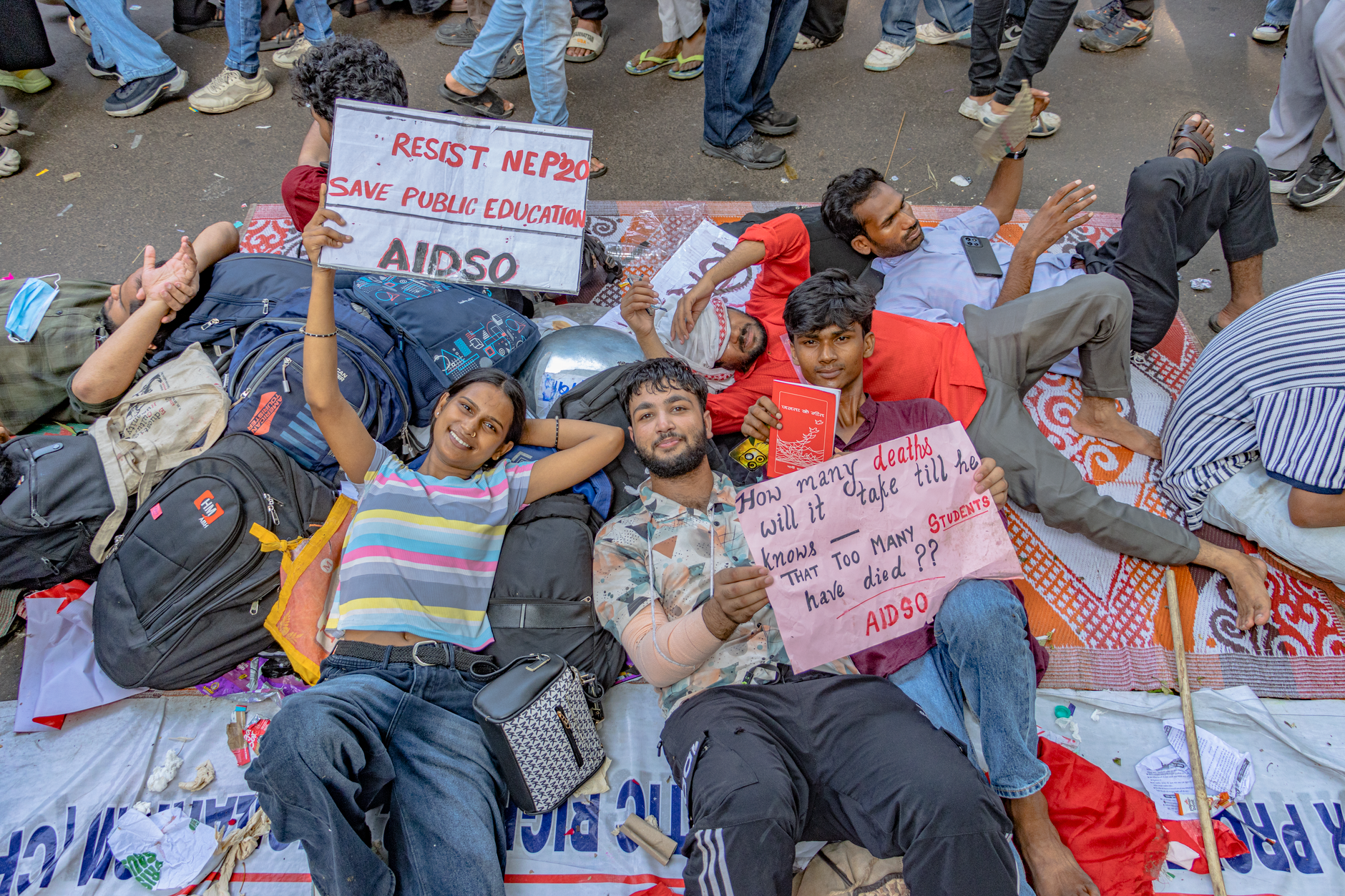
The task force’s first challenge is to restore faith in the examination system. The NEET paper-leak allegations triggered street protests and a political firestorm, with students demanding accountability. The credibility of the exam is essential not just for medical aspirants, but for the entire edifice of competitive selection in a country with 1.4 billion people.
Nilekani’s digital experience could be a double-edged sword. On one hand, his background in creating transparent, technology-driven systems offers a framework to make exams more secure. On the other, he must navigate a political landscape where education is a sensitive subject, and where state and central governments often have competing interests.
Beyond Paper Leaks: The Structural Gaps
Even if the paper-leak problem is fixed, the deeper crisis remains. India’s education system is marked by vast inequalities. Many children depend on underfunded government schools with overcrowded classrooms and poorly trained teachers. Digital platforms like Diksha and Swayam were launched to democratise learning, but they reach only those who have access to devices and internet connectivity.
Language diversity adds another layer. A platform might offer content in 12 languages, but the reality is that students from different regions have different linguistic needs. Economic hardship forces many students to drop out and seek work, further inflating the number of unskilled young people competing for limited jobs.
The Employability Question
Ultimately, the real test for Nilekani may not be whether he can fix exams, but whether he can fix the employability of India’s youth. The country’s unemployment rate, particularly among educated youth, is a ticking time bomb. Companies complain that graduates lack the skills needed for a modern workforce, from critical thinking to problem-solving.
Analysts say the task force must push for deeper changes in pedagogy, vocational training, and industry collaboration. A lesson learned from his digital projects is that infrastructure alone does not deliver outcomes; it must be paired with robust institutions and grassroots implementation. Applying that lesson to education, which involves millions of teachers and tens of millions of students, is a monumental managerial challenge.
What the Future Holds
Nilekani’s appointment signals that the government is looking for someone who can think at a system level. If he succeeds, India could see not just safer exams, but a more equitable education system that prepares its youth for the future. The stakes are enormous, but so is the potential payoff.
The road ahead is long and full of political minefields. Yet, as one analyst put it, if anyone can ace the test, it might be the man who taught India to believe in digital miracles. The next few months will reveal whether he can extend that magic to the classroom.